

 Login
Login
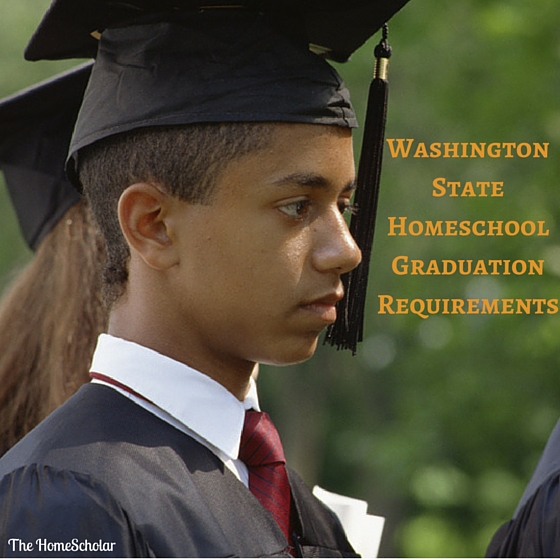
Washington State Homeschool Graduation Requirements
Homeschool law may not be the same as the law covering public or private schools. In Washington State, for example, public school is covered in one area of the law, and homeschool law is covered in an entirely different area. It can be confusing! When researching the laws in your state, make sure you are looking at the law that applies to homeschoolers. I frequently see homeschoolers trying to fit their homeschool into public school law, and it doesn't feel right. It can be like the old square peg and round hole!For many homeschoolers, college follows shortly after graduation. Gaining college admission and scholarships is the concluding act of your homeschooling career. Let me show you how to do it. Click to register for my free class: College Applications Simply Explained
Here is the key: there is a difference between public high school graduation requirements and requirements for homeschoolers. As a homeschool parent in Washington, you get to choose what your graduation requirements are. You can create your own transcript and award your own homeschool diploma, all within state law.
When you plan for college admission, you will exceed the academic requirements for graduation from public schools. College admission requires more than high school graduation. If you are following a college prep plan, then you are doing more than enough. You can read about college prep academics in this article: 9 Easy Steps: High School Graduation Checklist
Washington state law stipulates 11 required subjects to be taught in your homeschool curriculum. Moms often find it most surprising that Washington State History is not on the list, but Occupational Education is on the list. Occupational Education is an easy class to teach. Simply wait until your child gets a job, count hours on the job, and award credit based on those hours. It's the easiest class you'll ever teach.
Other Washington state homeschool requirements include:
- qualify to homeschool (one parent has one year of college or more, has taken a short class, agrees to work with a certified teacher, or is deemed qualified by the local school district)
- submit a declaration of intent to homeschool
- annual assessment (PSAT, SAT, and ACT count, or you can choose a non-test assessment by a certified teacher)
- required to keep records, but they don't say which records to keep. You are required to keep immunization records with your homeschool records, but you aren't required to immunize your children LOL)
You are doing everything right, don't worry. You don't have to be a public school. You are a homeschool. Different laws cover homeschools. For more information, check the Washington Homeschool Organization website.
If you don't live in Washington, please make sure you check the law for your own state.
Please note: This post was originally published in August 2009 and has been revamped and updated for accuracy and comprehensiveness.
Stay Informed
When you subscribe to the blog, we will send you an e-mail when there are new updates on the site so you wouldn't miss them.


.jpg)
208 N Western St.
Amarillo, TX 79106
Phone: 1-888-533-2435
Opening Hours: Monday to Friday: 9.00 am to 03:00 pm (PST)
Amarillo, TX 79106
Phone: 1-888-533-2435
Opening Hours: Monday to Friday: 9.00 am to 03:00 pm (PST)

Comments 11
I have been seeing that the high schools are changing their graduation requirements for different graduating years. For example, in our district, by the time my son graduates in 2023, he would be required to have 29 credits through the high school. While I know he only needs 24 per WA law, I keep seeing different requirements going around for fine arts and PE credits. I initially saw only 1 credit of each was required and now I'm finding 2 of each of those. Which is correct so I can make sure to have the correct number of credits for those required classes? Thanks so much!!!
Hi Lisa! Robin is absolutely correct - you only need to follow homeschool law graduation requirements, not public school graduation requirements. Now you see why - they change all the time, and it's hard to keep up with! While public schools must follow those laws, but homeschools and private schools can determine their own graduation requirements for those classes. I hope that helps! This is the link to the article that Robin suggested for you https://www.homehighschoolhelp.com/know-your-state-homeschool-law
Blessings,
Lee
Hi Lisa,
Thanks for your comment! You identified a really important point - all homeschool parents must watch homeschool current events and laws for changes.
In her article Know Your State Homeschool Law, Lee says,
"As you are reading the law, remember what it does not say. Searching for the law that applies to “high school” may not give you the information you need. The public school law may be reported in the newspaper, but that doesn't mean it applies to you. And even though it may specify requirements for public school graduation, that doesn’t necessarily equate to a quality education. Always keep in mind when looking over laws and educational requirements for your area, that public high school requirements are not usually enough for college admission. Many homeschoolers exceed the expectation of public schools, because they are invested in the academic success of their children."
Check Lee's article for helpful state-by-state homeschool law links.
Robin
Assistant to The HomeScholar
Thank you for this info...SO helpful! I have a daughter whose HS academic career was interrupted significantly with her battle with depression. We've patched her coursework together over the past couple of years and she is heading into her senior year and I was getting worried about graduation reqs. This information was the reassurance I needed. Blessings for your efforts!
Sue,
It happens so often, in our complicated world! Lee also wrote about how to cope in a "worse case scenario" homeschool: What If ? Homeschool High School Without Fear
Blessings,
Robin
Assistant to The HomeScholar
Thank you Jo Anna!!! I appreciate your encouragement!
Blessings,
Lee
Thank you Lee for all your information. Our son just graduated(HomeSchool)last week and is heading off to college!The information you provide on HomeSchooling is invaluable! You truly are a blessing to Washington State HomeSchoolers. Have a safe and restful summer!
God Bless you!
WOW! I wish I would have known this sooner! I would have written out my son's graduation requirements so much differently to begin with. Thankfully we still have two years to restructure to more fit the direction we're preparing him for, along with three more children that will benefit from this information.
So blessed by you... thank you!!!
Dear Kandis,
Yes, this still applies. You can read more about Washington State Homeschool law here:
http://www.washhomeschool.org/homeschooling/law.html
Blessings,
Lee
I'm a homeschooler and will be graduating in a couple years... Do these guidlines still stand? Do they apply to me?
Lee,
While homeschoolers are not expected to meet the public school graduation requirements, they can be used as a meaningful guideline for parents.
I disagree with you concerning occupational education. The purpose is to prepare students for an occupation. If they have a job, it is only considered for work experience credit, which can apply to flipping burgers (410 hrs. for 1 credit, as defined in the state law) or something more. For a more meaningful credit, students can explore various occupations (listed as career exploration), serve in an internship or apprenticeship, as well as enrolling in a vocational program. For some students, this may lead to a vocation aside from college.
Then there is also accounting, keyboarding, etc. which are also considered occupational education.